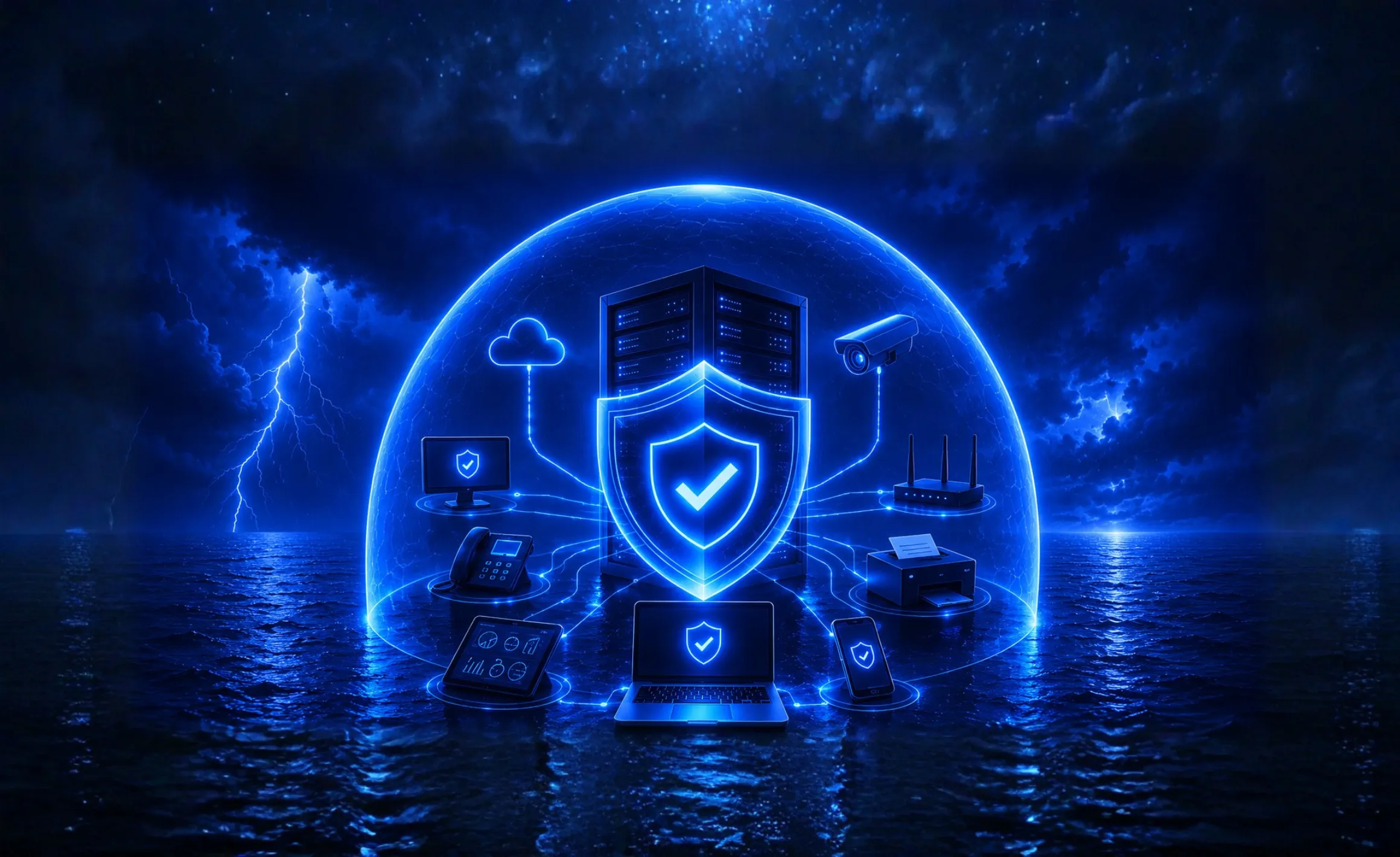
Some Storms Arrive with a Warning. Others Don't.
A network outage.
A failed application update.
A cloud service disruption.
A ransomware attack.
A power failure.
Technology disruptions rarely arrive whenorganizations expect them.
Yet some businesses continue operating almost seamlessly while others spend hours or even days trying to restore normalcy.
The difference is rarely luck.
It is reliability.
In today's digital economy, reliability has become a business capability rather than a technical metric. Customers expect uninterrupted services, employees rely on always-on systems, and leadership teams require continuous access to data and applications.
When systems fail, the impact extends far beyond IT.
Revenue suffers.
Productivity declines.
Customer trust weakens.
The organizations that weather disruptions successfully are the ones that prepare for them long before they occur.
Reliability Is Built in Calm Weather
Most organizations invest in technology during periods of growth.
The most resilient organizations also prepare for failure.
They understand that reliability is not defined by whether disruptions happen.
It is defined by how effectively the organization absorbs and responds to those disruptions.
Building reliability requires deliberate investments in:
The best time to prepare for disruption is before it arrives.
When IT Stops, Business Stops
A disruption is rarely just an IT event.
It quickly becomes a business event.
A short outage can result in:
Industry studies estimate that enterprise downtime can cost thousands of dollars per minute depending on the criticality of the affected services.
The longer recovery takes, the greater the business impact.
This is why organizations increasingly view reliability investments not as operational expenses but as business continuity investments.
The Organizations That Recover Faster Usually Have Three Things in Common
1. They Design for Failure
Reliable organizations assume disruptions will occur.
Instead of asking:
"What if our systems fail?"
they ask:
"When systems fail, how quickly can we recover?"
They build:
Their objective is simple:
Eliminate single points of failure.
2. They Detect Problems Early
Many disruptions begin as small issues.
A storage bottleneck.
A failed backup.
An overloaded server.
A network latency issue.
Organizations with:
identify these signals before they escalate into major incidents.
The earlier problems are detected, the easier they are to resolve.
3. They Know Who Owns the Problem
During an outage, confusion becomes the enemy.
Multiple vendors.
Different support teams.
Unclear escalation paths.
The result is delayed recovery.
Resilient organizations rely on:
Because reliability improves when accountability is clear.
Reliability Is an Equation, Not a Coin Toss
Many organizations still approach reliability as if it depends on good fortune.
The reality is much simpler.
Reliability = Resilient Infrastructure + Proactive Monitoring +Operational Accountability
If one element is missing, resilience weakens.
Infrastructure without monitoring creates blind spots.
Monitoring without accountability slows response.
Accountability without resilient system limits recovery.
The strongest organizations strengthen all three components simultaneously.
Why "One SLA, One Partner" Changes the Recovery Equation
Technology environments have become increasingly complex.
Cloud platforms.
Endpoints.
Datacentres.
Applications.
Security tools.
Managing these environments through multiple vendors often creates operational fragmentation.
A One SLA, One Partner approach simplifies recovery by providing:
Instead of coordinating multiple providers during a disruption, organizations can focus on restoring business operations.
Reliability becomes an organizational capability rather than a collection of disconnected technologies.
Is Your Organization Monsoon-Proof?
Before the next disruption arrives, technology leaders should ask:
✓ Can our infrastructure withstand unexpected failures?
✓ Are failover procedures regularly tested?
✓ Do we have complete operational visibility?
✓ Can we identify problems before users do?
✓ Is accountability clearly defined?
✓ Can were store critical services within business expectations?
The answers often reveal vulnerabilities long before disruptions expose them.
Final Thought
Storms are unpredictable.
Business disruptions are inevitable.
Luck is not a reliability strategy.
The organizations that continue operating when disruptions occur are the ones that invest in resilient infrastructure, operational continuity, and managed reliability services.
Because when the storm arrives, reliability should never depend on chance.
It should depend on preparation.